
Mastercard AI Agent Payments: The New Frontier in Digital Transactions

Estimated reading time: 7 minutes
Key Takeaways
- Mastercard Agent Pay introduces payments where AI agents and machines carry out transactions for users or businesses.
- Every AI agent is registered through Know Your Agent (KYA) with an agent ID for traceability and compliance.
- Tokenized credentials via Agentic Tokens ensure enhanced security: all payment info is agent, policy, and merchant specific.
- Network-level user consent and customizable policies (spending caps, merchant types, expiry) underpin agent operations.
- Traceability, dispute management, and fraud controls are built into the Agent Pay framework to ensure trust.
- IoT and Machine-to-Machine (M2M) payments are enabled, opening industrial and consumer applications.
- Regulatory standards and customer protection strategies are central to risk mitigation.
Table of Contents
Have you ever imagined a world where machines handle payments for you? Thanks to Mastercard AI Agent Payments, this vision is quickly becoming reality. In this post, we’ll break down how Mastercard is transforming digital transactions by empowering AI agents and machines to pay on our behalf—safely, instantly, and with control.
1. Unpacking Mastercard Agent Pay
At its core, Mastercard Agent Pay is a pioneering framework allowing registered, verified AI agents—or even intelligent machines—to initiate and complete payments for individuals and businesses.
The main pillars of Mastercard Agent Pay:
- Agent Identity: All AI agents register via Know Your Agent (KYA), receiving a unique agent ID stored on the network. This ensures traceability and accountability throughout the payment process.
- Tokenized Credentials: Payments operate with Agentic Tokens, unique tokens generated via Mastercard’s Digital Enablement Service. They’re strictly scoped to agent, user policy, and target merchant—drastically reducing fraud.
- User Consent & Policies: End-users can define how their agent is allowed to operate with clear, enforceable rules (spend cap, allowed categories, period), and those policies are validated on every transaction throughout the entire Mastercard network.
- Traceable Transactions: Every transaction includes the agent ID and intent data, visible to merchants, issuers, and Mastercard. This brings advanced fraud controls and powerful dispute resolution tools for agent-driven commerce.
“Mastercard’s agentic infrastructure creates a new class of trusted, programmable commerce—paving the way for safe, interoperable AI-enabled payments.”
2. Hitting Major Milestones – The Timeline and Partners
The official launch of Mastercard AI Agent Payments was announced in April 2025, targeting top-tier AI assistants such as ChatGPT, Microsoft Copilot, and IBM Watson.
Launch highlights:
- Initial tech partners: Microsoft, IBM, and Braintree (PayPal).
- 2025-2026: Phased rollout via Mastercard-Certified processors, culminating in full availability for global fintechs and retail banks.
- Collaboration with leading innovators like OpenAI, Cloudflare, and PayPal.
- Expansion into IoT/M2M payments with “Agent Pay for Machines” in 2026, enabling industrial robots, home devices, and autonomous vehicles to make secure payments.
This expansion into machine-to-machine commerce is a cornerstone for the future of connected devices—explore more with our breakdown of Internet of Things examples.
3. Technical Architecture: A Closer Look at Agent Pay
The engine under the hood is Mastercard’s world-class network tokenization technology—the same foundation powering Apple Pay and Google Pay, now extended to agents and machines.
- Agentic Token: Each agent receives a one-to-one network token bound to a single payment credential (card or account) and to a unique agent ID.
- Embedded in every token: spending/usage limits, allowed merchants, expiration rules, and dynamic authentication triggers.
- Raw card details never reach the agent or the merchant—tokenization ensures data stays safe end-to-end.
- User enrollment lets you select your card and define authorization policies for the agent—examples: “$200/month groceries” or “can pay for Uber, never for subscriptions, and expires in 60 days.”
- Every agent must pass the KYA registration—creating an immutable agent ID that is visible on every transaction.
- Integration with IoT/M2M systems enables not just software agents, but also autonomous vehicles, appliances, and even industrial robots to transact.
If you’re curious how these AI agents actually work, check our article on what is an AI agent and how does it work.
Mastercard is building open, interoperable protocols for agentic commerce in collaboration with other major networks—futureproofing new payment standards.
4. Risk, Regulation, and Competitive Context
Mastercard’s approach brings security, compliance, and transparency into the spotlight.
- Security: KYA agent ID, bidirectional traceability, and policy-bound tokens cut fraud dramatically compared to old-school “card on file.”
- Tokens are instantly revocable—if your agent, policy, or device needs to be locked, that token is cut off immediately.
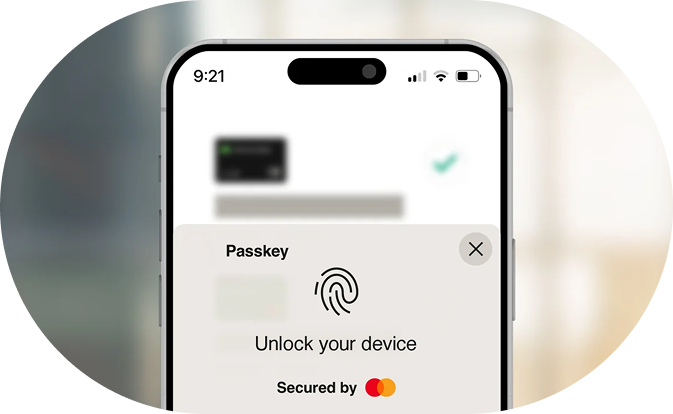
- Regulatory alignment: Integrated with strong customer authentication (SCA), biometrics/passkeys, and full audit trails.
- Competition: Other payment networks are exploring their own agent commerce protocols, but Mastercard’s policy-layer token stack and KYA registration provide a strong competitive edge.
For a deep dive on AI agent governance and data security, see our focused coverage of data access wars in agentic commerce.
Mastercard Agent Pay signals a future where autonomous payments are secure, programmable, and user-centric—ushering in a new era for digital finance.
Frequently Asked Questions
What is Mastercard Agent Pay?
Mastercard Agent Pay is a framework that allows AI agents and machines to make payments programmatically on users’ behalf, under strict user-defined policies, using tokenized credentials for privacy and control.
How does Know Your Agent (KYA) work?
Every agent must register through Mastercard’s [KYA process](https://www.mastercard.com/us/en/business/artificial-intelligence/kya), which verifies the agent’s identity and issue an agent ID. This ensures that all agent-initiated transactions are trusted and traceable.
How are payments kept secure?
Instead of sharing card numbers, agents and merchants only see Agentic Tokens—unique tokens scoped to agent, policy, and merchant. Every token can be instantly revoked by the user.
Can users control what agents can do?
Yes! Users set detailed policies: spending limits, merchant categories, duration, authentication steps, and even block or edit agent permissions at any time.
Which companies and partners support Mastercard Agent Pay?
Launch and tech partners include Microsoft, IBM, PayPal/Braintree, OpenAI, and Cloudflare. The rollout continues with major fintechs and enterprise platforms throughout 2026 and beyond.
Where can I learn more about agent technology in payments?
We recommend reading our deep dives on how AI agents work and secure governance of AI-driven payments.
}